

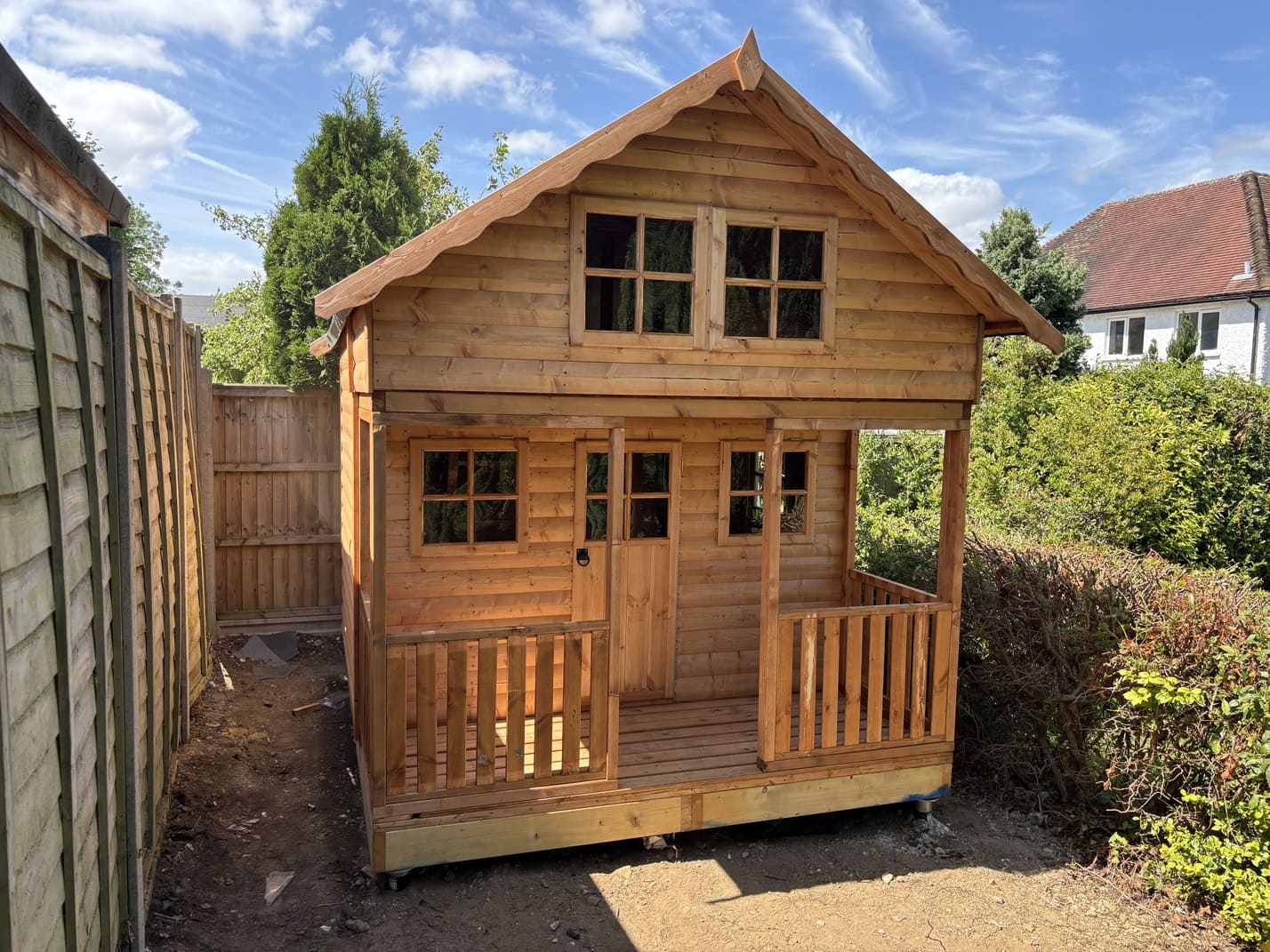
A garden room is a significant investment. Whether it will serve as a home office, a studio, a gym, or additional living space, the building itself will cost several thousand pounds — often considerably more. The foundation it sits on will determine how long it performs as intended.
Most problems that develop in garden rooms over time — rotting floor panels, doors that no longer align, damp patches in the interior — trace directly to a poorly chosen or poorly installed base. This article explains why ground screws have become the preferred foundation for garden rooms in the UK, and what a professionally installed ground screw base actually involves.
Why Garden Rooms Need a Better Foundation Than Sheds
A garden room is a different category of structure to a garden shed. Where a shed stores tools and materials, a garden room is a habitable building — often housing electronics, furniture, underfloor heating, or electrical installations. The standards required of the foundation are correspondingly higher.
A shed sitting on a slightly imperfect base may stick slightly when you open the door. A garden room with the same issue may have a warped frame, poorly sealing doors and windows that admit damp, and a floor that becomes uneven enough to be noticeable underfoot. In a structure that cost £15,000 or more, these are not acceptable outcomes.
Garden rooms also tend to stay in place for longer than sheds. A garden room, properly built on a good foundation, is expected to perform for twenty years or more. The base must match that expectation.
The Problem With Concrete as a Garden Room Foundation
Concrete is often the default assumption for any permanent garden building, and for some structures it remains the right choice. For garden rooms specifically, however, it has a set of disadvantages worth understanding before committing.
The most significant issue is moisture. A concrete slab provides no airspace between the ground and the floor of the garden room. Rain hitting the concrete splashes up against the base of the structure — a process known as splashback — depositing moisture at the bottom of the cladding and floor panels over time. On a concrete base, there is nowhere for this moisture to go. The result, in many garden rooms, is rot beginning at the base of the walls within ten to fifteen years.
Concrete also presents practical problems during installation. Laying a concrete slab requires excavation, compaction of a hardcore sub-base, formwork, and a pour. The concrete then needs at least 48 hours to cure before anything can be placed on it. On sloped ground, the complexity and cost rise significantly. And once poured, the slab is permanent — if the garden room is ever relocated or replaced, the concrete remains.
The environmental cost is also considerable. Cement production is among the most carbon-intensive industrial processes globally. For a domestic garden room foundation, this is a substantial carbon commitment for a structure that may not outlast the building above it.
How Ground Screws Work as a Garden Room Foundation
Ground screws for garden rooms are galvanised steel helical piles driven into the soil using specialist equipment. Each screw is installed vertically to a depth determined by the soil conditions and load requirements, then adjusted to the precise height needed to create a level grid of mounting points across the garden room footprint.
A structural timber frame — pressure-treated, minimum C16 or C24 grade — is built across the tops of these mounting points using galvanised joist brackets. The garden room sits on this frame.
The critical feature for garden rooms is the airspace. The timber frame sits clear of the ground, typically by 40mm or more. This gap allows air to circulate beneath the building continuously. Moisture does not accumulate. Splashback from rain cannot reach the cladding at floor level. The conditions that cause rot in concrete-based garden rooms simply do not exist.
Our ground screw foundation system works equally well for garden rooms — the same engineered approach, no concrete required.
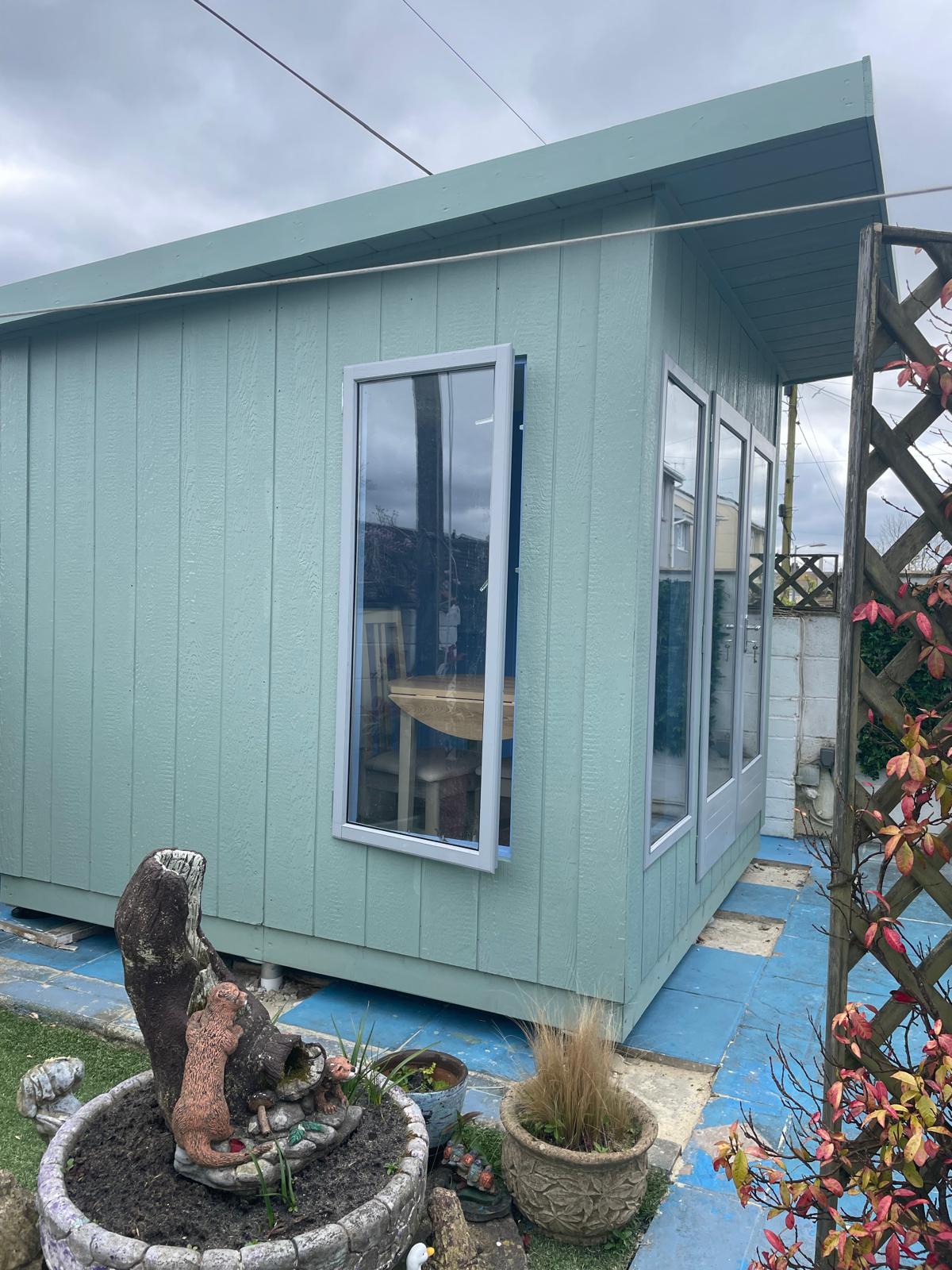
Key Benefits of Ground Screws for Garden Rooms
Installation in a single day
A standard garden room foundation using ground screws is installed in one day. There is no concrete to pour, no waiting for materials to cure, and no multi-day groundwork sequence. The building can go on immediately after the base is complete.
No excavation required
Ground screws are driven into the existing ground without any digging. The garden is not disrupted. Turf, plants, and soil remain undisturbed except at the precise points where screws are installed. There is no skip hire, no soil removal, and no reinstatement work after the foundation is complete.
Works on sloped and uneven ground
Garden rooms are often sited at the end of a garden, where ground is most likely to be sloped or irregular. Ground screws handle gradient without any additional groundwork. The screws on the lower side of the slope protrude further above ground to compensate for the drop, and the resulting frame is level.
Ground screws are equally effective on sloped and uneven ground. If you are working on a gradient, our detailed guide to building a shed base on a slope covers all five foundation methods with a full comparison of costs and disruption.
Reversible
If the garden room is relocated, extended, or replaced, the ground screws can be extracted. The ground returns to its original state. This is not possible with concrete, which is effectively permanent once poured.
Lifetime warranty on the screws
Gorilla Base ground screws are covered by a lifetime warranty. The galvanised steel construction resists corrosion and is designed to outlast any structure built on top of them.
What Is Included in a Gorilla Base Garden Room Installation
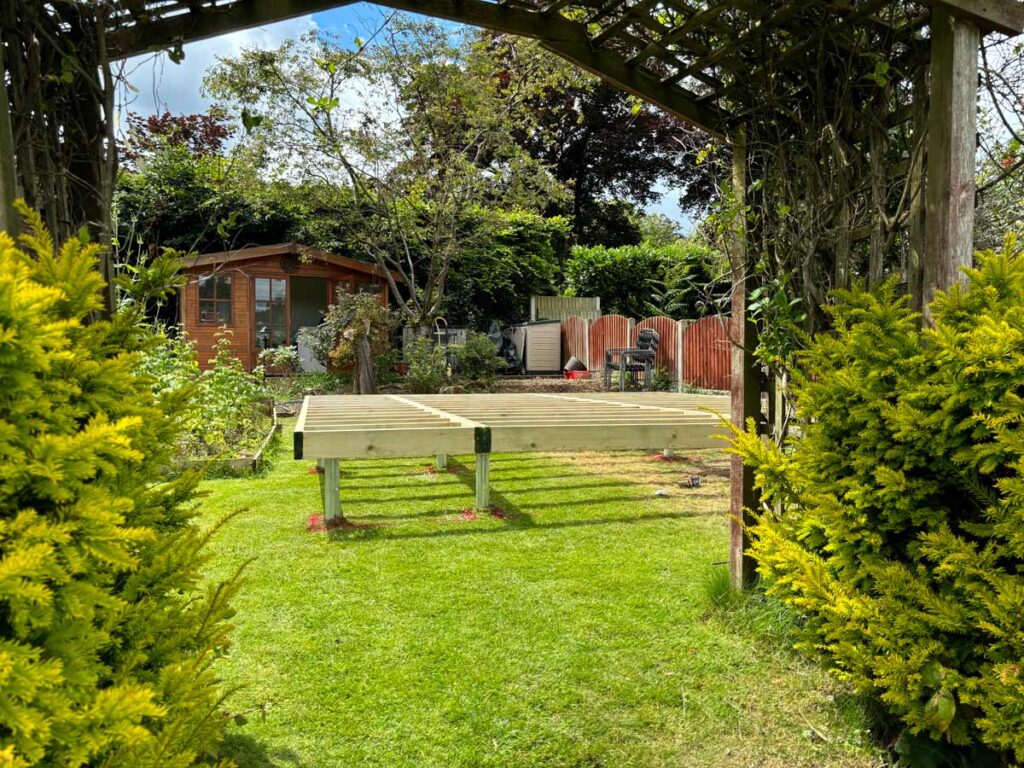
Every Gorilla Base installation for a garden room includes:
- Ground screws in the appropriate length and quantity for your footprint and soil conditions
- Galvanised steel joist brackets
- Pressure-treated structural timber frame (minimum 44mm x 144mm, C16 or C24 grade)
- Full professional installation by our trained team
- Precise levelling across the full footprint, including on sloped ground
- Immediate handover — ready to receive your garden room on the same day
The price covers everything required to create a level, load-bearing base. You do not need to source materials separately or coordinate multiple contractors.
Our ground screw foundation system supports garden rooms up to 12m × 6m — installed in a single day, with no concrete and no excavation.
Every Gorilla Base is designed around your specific site and building, rather than supplied as a generic, off-the-shelf product. We quote from three simple details — your name, postcode and base size — and then adapt the specification to your ground conditions, access and slope. In most cases, that adaptation comes at little or no additional cost, because getting the specification right from the outset matters more to us than saving on materials.
Ground Screws vs Concrete for Garden Rooms
| Ground Screws | Concrete Slab | |
|---|---|---|
| Installation time | One day, immediate use | 2–3 days including cure time |
| Ground disruption | Minimal | Significant excavation |
| Airspace beneath building | Yes — prevents rot and damp | No — splashback risk |
| Works on slopes | Yes, without extra groundwork | Requires extensive preparation |
| Reversible | Yes — screws can be extracted | No — permanent |
| Environmental impact | Low — no cement | High CO2 from cement production |
| Warranty | Lifetime on screws | No standard warranty |
Choosing the right base type is as important as the ground screw system itself. If you are comparing all available options — including concrete, paving slabs, gravel, and plastic grids — our complete guide to shed base options covers each method on cost, stability, lifespan, and suitability for different ground conditions.
Does a Garden Room on Ground Screws Need Planning Permission?
Whether planning permission is required for a garden room depends on the size, height, and location of the building — not the foundation type. Ground screws do not affect the planning status of the structure.
Most domestic garden rooms fall within permitted development provided they meet the standard conditions: they are single-storey, the eaves height does not exceed 2.5 metres, the total height does not exceed 4 metres for a dual-pitched roof or 3 metres otherwise, and the building does not cover more than 50% of the garden area.
If your garden room is to be used as self-contained sleeping accommodation, permitted development rights do not apply and planning permission will be required. The Planning Portal provides detailed guidance for England and Wales.
Frequently Asked Questions
A Recent Garden Room Installation: Dunster House Terminator, Bexleyheath, Kent
A customer in Bexleyheath, Kent was planning a 5m × 4m Dunster House Terminator garden building with 44mm walls, intended for secure garden storage. The site was relatively level, but poor access, three large tree roots and an existing tree stump made a traditional concrete base far less practical.
Once the tree stump had been removed, we installed 20 galvanised ground screws and completed the full timber frame, level and ready for construction, within four hours. The bespoke Gorilla Base subframe provided a precision-engineered foundation with minimal disruption, no excavation and virtually no mess.
- Footprint: 5m × 4m
- Ground screws installed: 20
- Installation time: 4 hours
- Ground condition: Relatively level, with poor access, tree roots and a tree stump removed prior to installation
- Result: Level, load-bearing frame ready for immediate build
For garden rooms on challenging or obstructed sites, our team adapts each installation to the ground conditions to achieve a perfectly level base — no excavation required. See our full guide to installing a base on a slope for more detail.
Garden Room Ground Screws: What to Expect on the Day
When customers ask about garden room ground screws, the questions that come up most often relate to what the installation actually involves — not in technical terms, but practically. What time does the team arrive? What is left behind when they go?
A typical ground screw foundation for a garden room involves two to four people working for four to six hours. The team arrives with the screws, the installation equipment, the joist brackets, and the structural timber already cut to size. There is no delivery of loose materials in advance and no need for a skip.
The process is consistent whether the garden room is a 3m × 3m home office or a 6m × 4m studio. The screw positions are marked, the screws are driven to the correct depth and torque, heights are checked and adjusted across the whole footprint, and the timber frame is built across the mounting brackets. When the team leaves, the frame is level, load-bearing, and ready for your building.
For those who have previously used concrete or paving slabs as a foundation, the contrast is significant. There is no wet concrete, no waiting period, and no surface to protect during the cure. Garden room foundation screws are installed and ready within a single working day.
If you are comparing this approach against a concrete slab, our complete guide to shed base options sets out the differences across cost, installation time, and long-term performance.
Start Your Garden Room Foundation Today
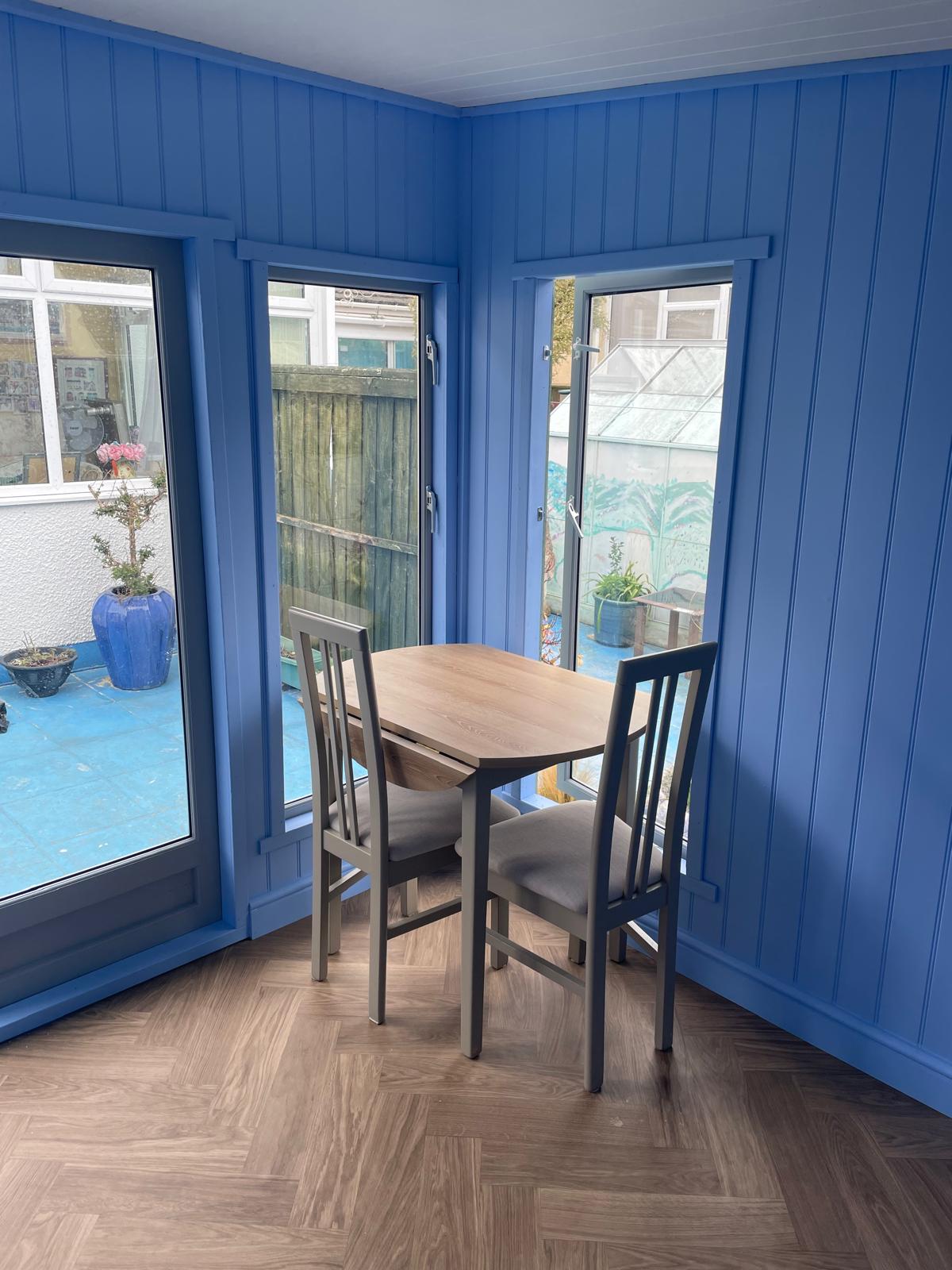
If you are planning a garden room, Gorilla Base installs bespoke ground screw foundations across the UK — professionally installed, guaranteed for life, and ready to build on in a single day. Send us your name, postcode and base size and we'll come back with a fixed-price quote, adapted to your site.
Get a Free Quote