

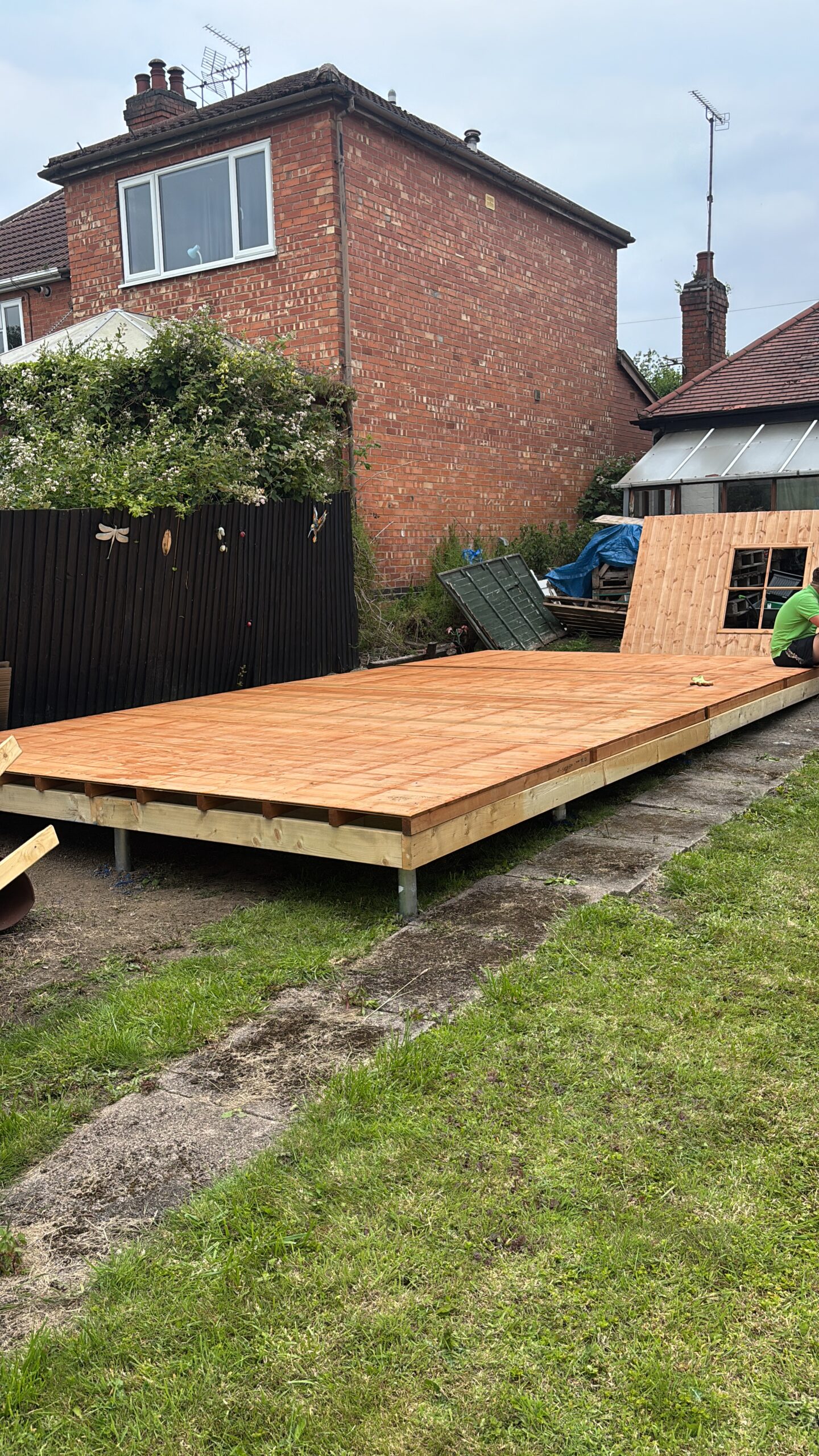
Building a shed base on a slope requires a level foundation despite the uneven ground beneath. Whether you are placing a shed on a slope in a terraced garden or dealing with a more gradual gradient across a larger footprint, the foundation method determines whether the structure stays true over time. Ground screws are the most practical solution — they adjust to any gradient by protruding to different heights (typically 200–600mm variance), creating a level plane without excavation. A typical 10×8ft shed base on a 1:10 slope takes 4–6 hours to install versus 2–3 days for concrete alternatives.
This guide compares five methods for installing a shed base on sloped ground, covering costs, disruption levels, and long-term stability to help you choose the right approach for your gradient.
Why a Level Base Matters on Sloped Ground
Before looking at the options, it is worth understanding what happens when a shed sits on an uneven base — even a slight one.
An unlevel shed puts unequal stress on the frame. Doors and windows bind or fail to close properly. Floor panels gap or warp over time. Water pools at the lower end of the structure rather than draining away. In timber buildings, this standing moisture accelerates rot significantly.
Most manufacturers require a level base as a condition of any structural warranty. According to HSE structural guidance, foundations on sloped ground must account for lateral soil movement and drainage. If the ground shifts further after installation — as it tends to do with poorly compacted fill or shallow footings — realignment becomes difficult or impossible without dismantling the shed.
Option 1 — Excavate and Level the Ground
The most straightforward approach in theory: dig into the slope on the high side and build up the low side until the entire footprint is flat and even.
In practice, this works well for gentle gradients where the elevation change across the shed footprint is small. For steeper slopes, the volume of soil to be removed and the height of compacted fill required quickly become impractical. Compacted fill on a slope is also vulnerable to movement during wet weather, causing the base to become uneven again after installation.
Option 2 — Concrete Shed Base on a Slope
A poured concrete slab is a common choice for flat gardens but becomes substantially more complex on a slope. To create a level slab on uneven ground, significant shuttering is required to hold the concrete at the right height on the downhill side. The depth of concrete at the lower edge can become considerable, raising both materials cost and labour time.
The slab must also be given adequate curing time before any load is placed on it — typically at least 48 hours, and longer in cold weather. Concrete on a slope also raises a drainage question: if the surrounding ground continues to slope toward the shed after construction, water will be directed toward the base.
Concrete is not reusable. If the shed is ever moved or the layout changes, the slab remains in the garden permanently. Ground screws, by contrast, can be removed and reinstalled elsewhere — an advantage worth considering if your garden plans may evolve over time. Our guide to eco-friendly garden building foundations covers the environmental differences between concrete and screw-based systems in more detail.
Option 3 — Concrete Blocks or Paving Slabs on a Slope
Concrete foundation blocks can be used to create individual support points at different heights across a sloped footprint. The blocks on the downhill side sit higher above the ground surface, compensating for the change in elevation. This method avoids the need for a full slab and requires less groundwork.
However, individual blocks rely on stable, undisturbed ground beneath each one. On a slope, the soil beneath the lowest-positioned blocks is often the most likely to be displaced by water movement over time. Paving slabs present similar limitations — each must be individually levelled, which is time-consuming and prone to settling on a sloped site.
Option 4 — Timber Frame on Posts
Building a raised timber frame supported on posts at varying heights is a sound structural approach for steep slopes. The posts on the downhill side are taller, lifting the frame to a level plane above the uneven ground. This method is effective but requires significant skill to execute correctly.
The posts must be set into the ground at sufficient depth to resist lateral movement and must be treated to resist moisture at the point where they enter the soil — the location most vulnerable to rot. On steep slopes, the visual effect of tall exposed posts on the downhill side can also be a consideration.
Option 5 — Ground Screw Foundation for a Sloped Site
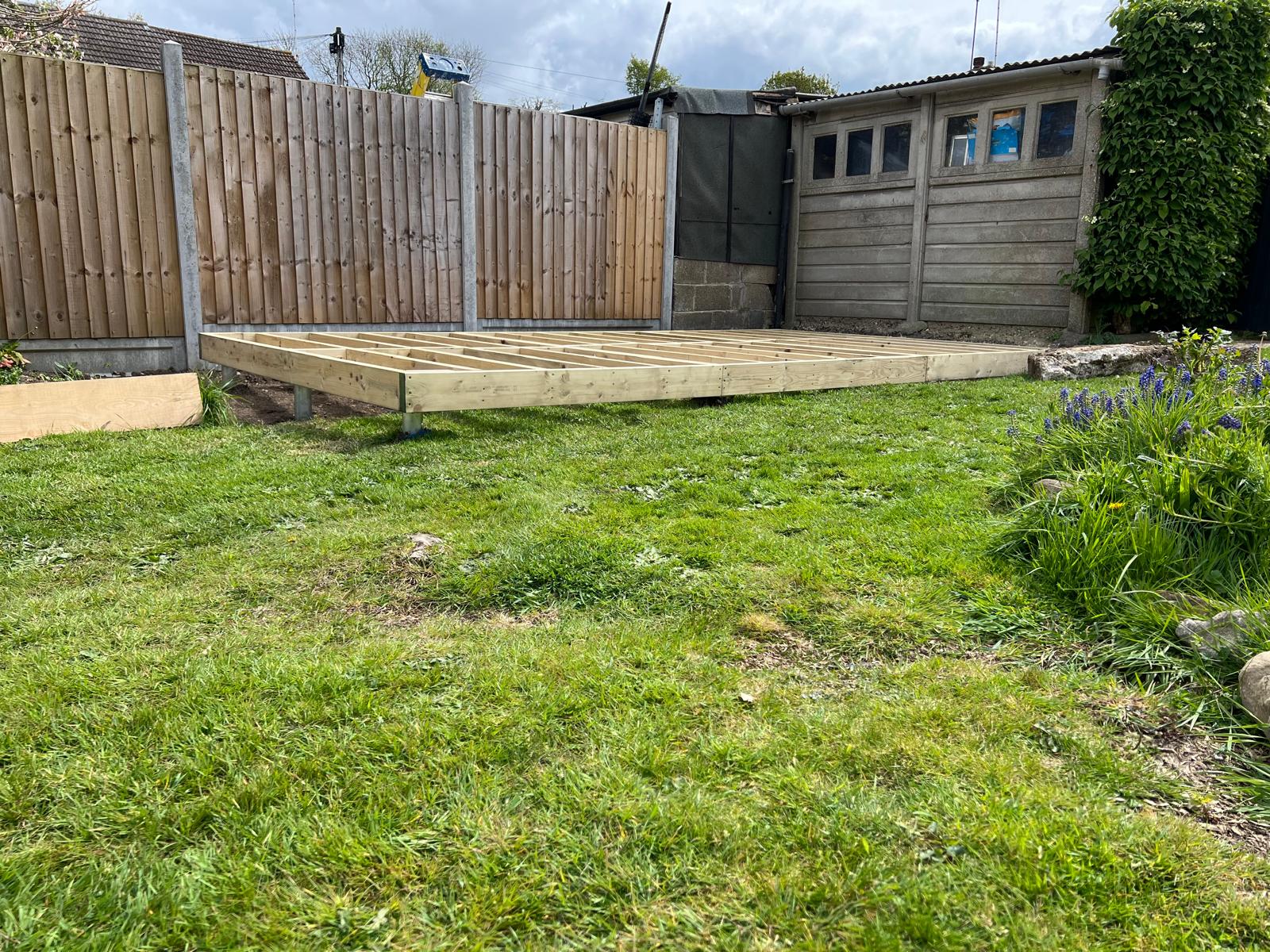
Ground screws are the most practical and least disruptive solution for a shed base on a slope, and the reason is straightforward: the slope does not need to be corrected. The ground screws accommodate it.
Each screw is driven vertically into the ground to a depth determined by the soil conditions. The amount of the screw that protrudes above ground level is then adjusted individually. On the high side of the slope, screws protrude less. On the low side, they protrude further. The result is a set of mounting points that all sit at exactly the same height, regardless of the gradient beneath them.
A structural timber frame is then built across these mounting points. The frame is level. The shed sits level. No excavation has taken place.
This approach works equally well on gentle gradients and on gardens with significant drops across the shed footprint. The greater the slope, the more the screws on the downhill side protrude — but the installation method does not change.
A ground screw foundation is particularly well-suited to sloped sites: each screw can be set to a different height, creating a perfectly level platform without any excavation or concrete.
How to Install a Shed Base on a Slope Using Ground Screws
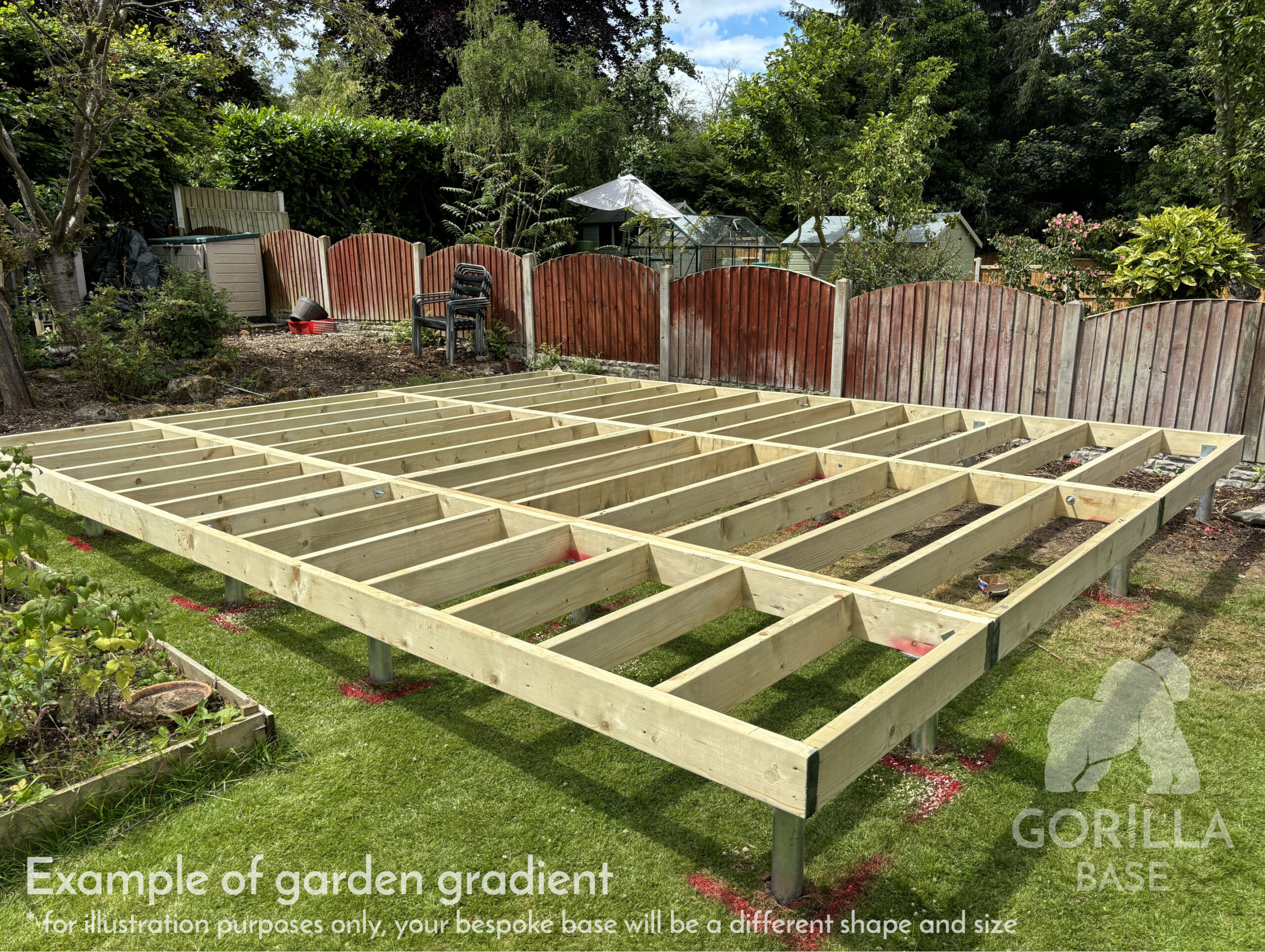
Gorilla Base installs ground screw bases professionally across the UK, including on sloped, terraced, and irregular ground. Most installations on a slope are completed within a single day — no concrete, no excavation, no curing time required.
Site Assessment
Assess the slope across your planned shed footprint to determine the appropriate screw length and protrusion for each position. The highest point of the site is used as a datum — all other screws are set relative to this reference height.
Install Ground Screws
Drive each ground screw vertically into the ground using specialist hydraulic installation equipment. Screws on the downhill side protrude further above ground to compensate for the slope — typically between 200mm and 600mm of variance across the footprint — while all mounting points are brought to exactly the same height.
Attach Brackets and Build Frame
Attach galvanised joist brackets to the installed screws and build the structural timber frame on top. Every mounting point sits at the same level regardless of the gradient beneath, giving you a perfectly flat platform ready for the shed immediately.
Comparing Methods for a Shed Base on a Slope
Which shed base options work on uneven ground?
| Method | Works on steep slopes | Disruption | Ready to build | Long-term stability |
|---|---|---|---|---|
| Excavate and level | Limited | High | Immediate | Variable |
| Concrete slab | With difficulty | High | 48+ hours | Good if well laid |
| Concrete blocks | Moderate slopes | Low | Immediate | Variable |
| Timber posts | Yes | Moderate | Immediate | Good if treated |
| Ground screws | Yes | Minimal | Immediate | Excellent |
Looking to install a ground screw base for your shed? Visit our ground screw installation service page for pricing and installation options. For a deeper breakdown of the two most common approaches, see our ground screws vs concrete comparison guide.
>For a complete ground screw foundation system that works on any terrain — including slopes, uneven ground, and soft soil — explore the full Gorilla Base ground screw range, installed in a single day with a lifetime warranty on every screw.
If you are still deciding which base type is right for your project, our complete guide to the best shed base options covers every method available in the UK with a full cost and lifespan comparison.
If you are planning decking rather than a shed base, ground screws offer the same advantages on sloped ground — no excavation, immediate use after installation. See our ground screws for decking page for full details on how we level decking frames across uneven gardens.
If you are planning a garden room on ground screws, the same principles apply to sloped ground — our team handles any gradient without additional groundwork. For larger structures such as garden offices or studios, our guide to foundations for garden offices, studios, and sheds explains how ground screws compare to concrete for heavier, more complex builds.
How to Level a Shed Base on Uneven Ground
Levelling a shed base on sloped or uneven ground is the central challenge of any installation — and the method you choose determines how well the base performs over time. The question is not just how to level the ground itself, but how to create a stable, level platform that stays true as the seasons change.
Ground screws solve the levelling problem without touching the ground at all. Because each screw protrudes to a different height above the surface, the mounting points can all be set to exactly the same level regardless of the gradient beneath them. The result is a self-levelling shed base system — the screws do the work that excavation and fill would otherwise require. We cover the full mechanics of this approach in our article on how ground screws solve uneven terrain, including drainage considerations and installation without excavation.
For those using concrete blocks or paving slabs as shed base supports, each individual support must be packed and levelled separately — a time-consuming process that is particularly error-prone on a slope where the ground beneath each block sits at a different height. Even small discrepancies compound across the footprint.
Does a shed base need to be perfectly level?
Most shed manufacturers specify a tolerance of 5–10mm across the base footprint. Beyond this threshold, doors and windows begin to bind, floor panels may gap, and the structural frame comes under unequal stress. In practice, the closer to perfectly level the better — particularly for larger buildings where small errors at one end translate to noticeable misalignment at the other.
Ground screw installations are set to within 2–3mm across the full footprint as standard. Concrete slab methods, by contrast, depend on the skill of the pour and the accuracy of the shuttering — achieving a consistent level on a slope requires considerable care.
Does a Shed Base on a Slope Need Planning Permission?
A shed or garden building on sloped ground does not automatically require planning permission. Most small domestic outbuildings fall within permitted development rights, provided they meet certain conditions relating to size, height, and proximity to boundaries.
One factor worth noting on sloped sites: the height of the structure above ground level is measured from the highest point of the eaves or ridge. On a slope, the downhill side of the shed may sit noticeably higher above the ground surface than the uphill side. If the combined height of the shed walls and the ground screw protrusion on the downhill side brings the structure close to the permitted development height thresholds, it is worth checking with your local planning authority before proceeding. The Planning Portal provides clear guidance for England and Wales.
Frequently Asked Questions
Ready to Build Your Shed Base on a Slope?
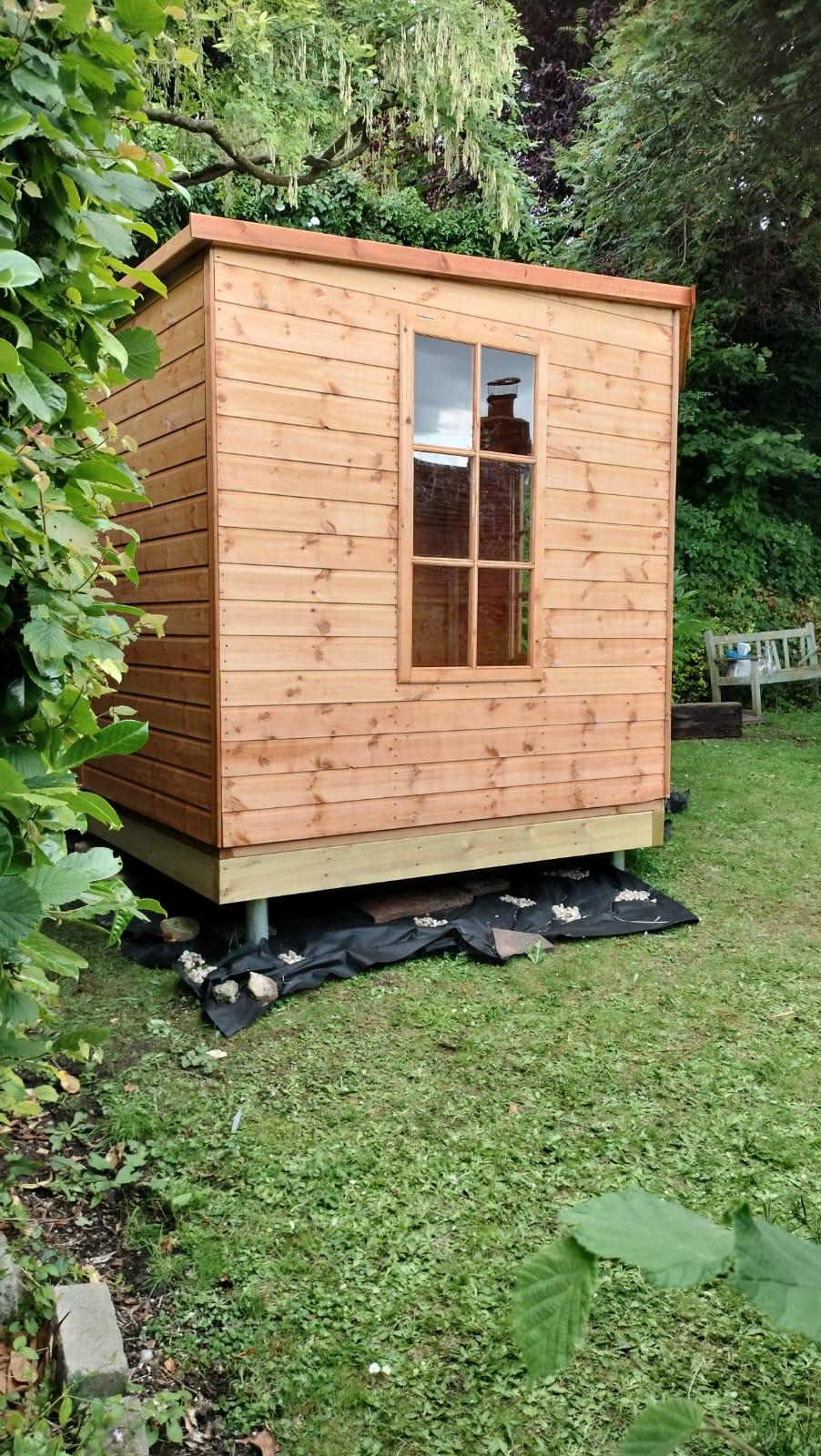
If your garden has a gradient that has made a shed base seem complicated, ground screws are worth considering as your first option rather than your last resort. Get in touch with a brief description of your site — the size of the building footprint and an approximate idea of the slope — and we will provide a clear, fixed-price quote.
Get a Free Quote